Global Cooperation of Autocratic Regimes: Analysis of Threats by The Economist
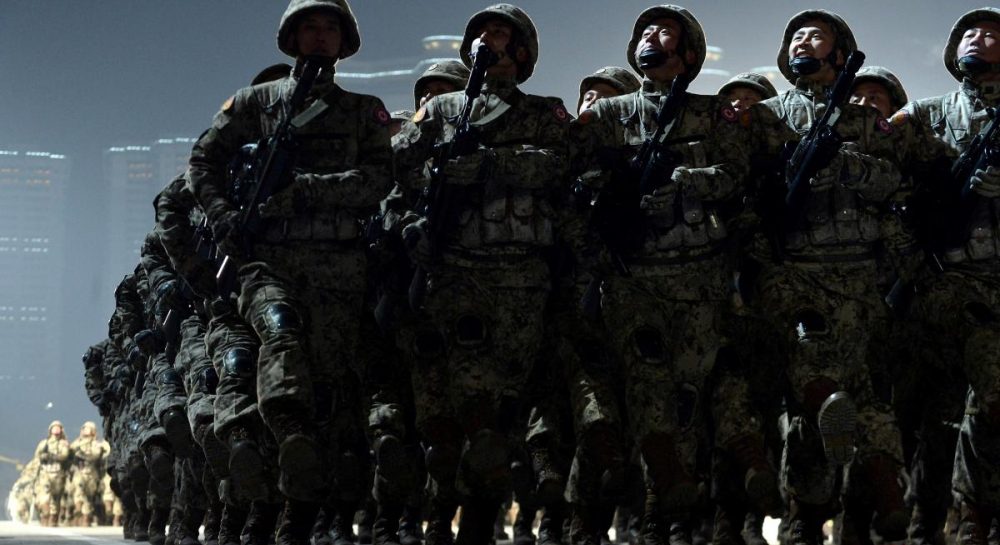
The Economist reports on the strengthening coordination between Russia, China, Iran, and North Korea, creating new challenges for international security.
 💡Tech
Photo: UNIAN
Key points
- Formation of an informal alliance of four states
- Over 600 instances of security cooperation since 2019
- Absence of unified command despite high coordination
A New Architecture of Geopolitical Influence
Analysts at The Economist note the formation of a de facto alliance between Russia, China, Iran, and North Korea. Despite the lack of formal mutual defense treaties, these states are actively exchanging military technologies, intelligence, and combat experience. According to the FDD center, over 600 instances of security cooperation have been recorded since 2019, with intensity increasing significantly following the start of Russia's full-scale invasion of Ukraine.
Features of the Informal Partnership
Unlike NATO, this alliance lacks a unified command, and the interests of the participants sometimes conflict. For example, China seeks economic stability, while Russia is interested in high energy prices and global instability. However, mutual support allows these countries to more effectively bypass international sanctions and neutralize Western efforts to contain them.
- Exchange of military technologies and intelligence.
- Joint mechanisms to minimize the impact of sanctions.
- Lack of a single management structure, complicating the prediction of the bloc's actions.
Source UNIAN — unian.ua/world/rosiya-knr-iran-ta-pivnichna-koreya-stvorili-neforma… ↗
Read next
 🛡️Security
Another attack on the Novoshakhtinsk oil refinery: incident details
On the night of November 23, the Novoshakhtinsk oil refinery in Russia was hit, affecting a key supplier of fuel for the Russian military.
 🚨Events
Police operation launched in Kharkiv following fatal shooting
A shooting incident in Kharkiv on the evening of November 22 resulted in one fatality. Law enforcement has initiated a special operation to apprehend the perpetrators.
 🏙️City
Debris of latest Russian missiles found in Poland
Fragments of X-101 cruise missiles, manufactured in late 2026, were discovered in eastern Poland. The incident has prompted a response from NATO and discussions on streng…
 🛡️Security
Charity auction in Lviv region raises 60 million UAH for Ukrainian defenders
A large-scale charity event in the Lviv region has raised funds to support the Armed Forces of Ukraine and rehabilitate a wounded soldier.
 🚌Transport
Violation of Polish Airspace: Details of the Incident Involving Russian Missiles
Polish officials have declared the incursion of Russian missiles and a drone into their airspace as a deliberate provocation.
 🛡️Security
Another Nighttime Enemy UAV Attack: Airspace Situation Update
On the night of November 23, Ukraine faced a massive attack by strike drones moving from various directions.